Last Updated on May 5, 2026 by David
Identifying the Causes of Dullness, Patchiness, and Cleaning Difficulties
If you have noticed that your Victorian tiles are increasingly dull, patchy, or more challenging to clean over time, the causes typically arise from a blend of issues. These include trapped residues, moisture movement, and the gradual wear on the unglazed clay surface. Conventional cleaning methods, such as mopping, often address only surface dirt, leaving residues, contaminated rinse water, waxes, and salts that remain hidden beneath the surface. despite cleaning efforts, the floor may still show signs of fatigue and wear, as the visible dirt merely points to a broader problem affecting the overall state of the floor.
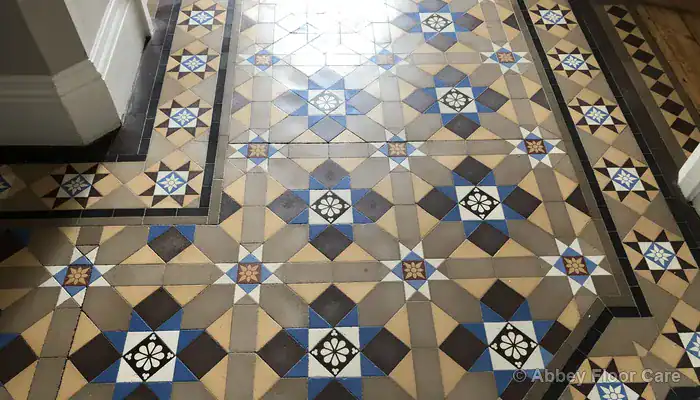
Victorian and Minton hallway floors primarily comprise unglazed clay, which significantly differs from modern glazed tiles. The rich colours of these tiles originate from mineral oxide pigmentation, fused into the tile’s body during the firing process. This means hues such as red, buff, black, cream, and ochre are integral to the tiles, rather than merely surface-level paints. Although this construction offers durability, it does not shield these floors from damage. Softer colours are particularly vulnerable to wear from grit, foot traffic, and aggressive cleaning methods.
The porosity of the tiles substantially influences their upkeep; older domestic tiles can absorb moisture, cleaning solutions, surface dirt, and trapped contaminants, resulting in issues that standard cleaning products frequently fail to resolve effectively. Employing professional cleaning techniques, such as pre-wetting and rinse control, becomes crucial. Excess moisture can drive contaminants deeper into the tiles, while inadequate rinsing can leave residues on the surface. cleaning Victorian tiles involves far more than simply wetting and scrubbing.
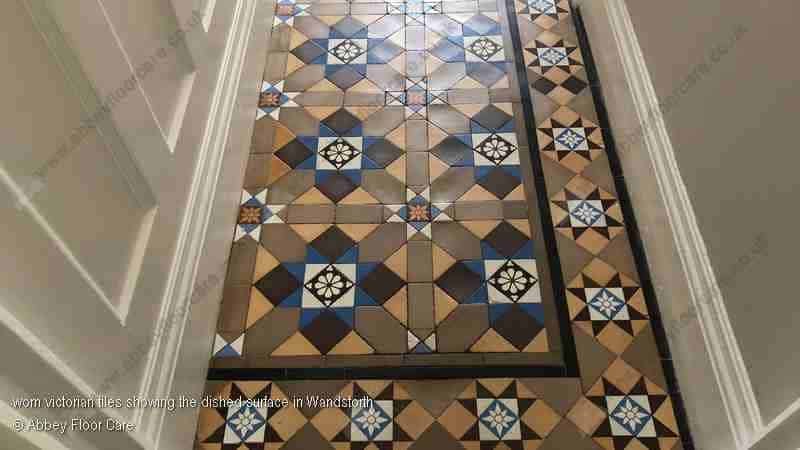
The term “dishing” refers to the shallow concave wear that develops in high-traffic zones over decades. Homeowners often notice hollowed pathways, muted earth-tone tiles, and disrupted light reflections across the surface. While cleaning can effectively eliminate dirt and old residues from these hollows, it cannot repair worn clay or restore intricate patterns that may have faded over time.
Understanding How Old Coatings Can Obscure the True Condition of Your Floor
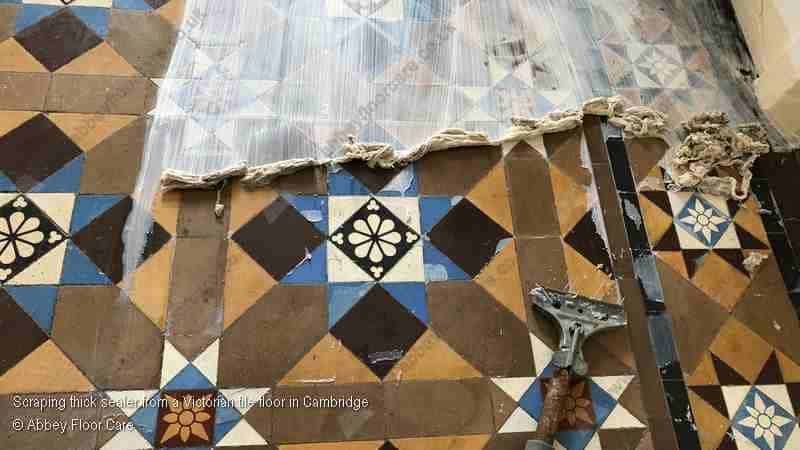
The appearance of patchy colour often results from older coatings degrading inconsistently across the tile surfaces. Waxes, linseed oil, outdated products, acrylic sealers, and built-up grime can penetrate the tile body, leading to a darkened, dirty appearance that resembles simple soiling. The blackening caused by wax and linseed oil signifies a coating problem rather than merely a cleaning issue. Effective removal requires conservation methods and suitable surface treatments rather than relying solely on a more potent cleaning solution.
Failures in acrylic sealers present a unique challenge, manifesting as coatings that do not adhere adequately to the tile surface. Homeowners may notice inconsistent sheen, dull patches, peeling, whitening, or sticky areas after cleaning, particularly in locations where moisture, salts, or old waxes have become trapped beneath water-based layers. Decisions regarding coating removal require specialist evaluation, as acrylic sealers function efficiently only under optimal conditions, free from dampness and salt presence.
The accumulation of residue film contributes to the floor appearing dirty soon after cleaning, as cleaning solutions, soil, and rinse water can dry back into the clay instead of being effectively removed. While the surface may initially look improved when wet, it may revert to a greyish hue upon drying, as the embedded residue becomes visible once again. A practical illustration of this embedded soil and grout contamination can be found in the soiled Victorian tile cleaning case study in Farnham, where the success of the cleaning efforts relied on distinguishing contamination from the clay rather than simply polishing the tile surfaces.
Understanding How Moisture Affects the Drying Process of Your Floor
The movement of moisture is a critical factor that influences the uneven drying of older floors after cleaning. Many original Victorian tiles were installed without a damp-proof membrane (DPM), allowing moisture to rise, evaporate, and lead to damp-related challenges, worsened by winter rainfall, which can affect the condition of these floors long after washing. The absence of a damp-proof membrane does not inherently indicate floor failure; however, it underscores the importance of selecting breathable sealers and understanding their drying characteristics before applying any protective finish.
<a href="https://limitsofstrategy.com/victorian-tile-restoration-costs-in-london-and-home-counties/">Efflorescence</a> refers to the white deposits that form when moisture brings dissolved salts to the surface, leaving behind crystalline residues after evaporation. Homeowners may notice powdery substances, pale blooms, cloudy edges, or persistent deposits reappearing after cleaning. Treatment options depend on whether these white marks originate from surface residues, salt movement, or coating failures. Employing gentle circular motions and thorough rinsing forms part of controlled treatment strategies rather than shortcut cleaning methods.
Over-wetting can trigger salt issues, resulting in a floor that appears clean but develops white marks upon drying. Excess moisture can saturate old floors, disturb salt deposits, and trigger a reaction from salt crystals, turning a cleaning attempt into a recurring diagnostic concern. The use of steam, excessive water application, and casual soaking are unsuitable for moisture-sensitive Victorian tiles.
Recognising That Wear Affects Both Colour and Cleanliness
The loss of colour signifies a tangible reduction in visible pigment, clay slip, or the integrity of the fired surface rather than merely dirt accumulation on the surface. Homeowners may observe faded patches of red, buff, or cream that remain pale even after thorough cleaning. While cleaning can significantly enhance the surrounding surface, it cannot restore missing clay or reverse the effects of damaging abrasion.
The patterned encaustic areas are particularly delicate and require special care due to the thin inlaid slip layer. Abrasive pads, powders, scratch marks, excessive wear, loss of natural finish, over-cleaning, clay inlays, and removal of intricate patterns pose risks of permanent reduction due to harsh restoration efforts. The guide to faded Victorian mosaic tile colour clarifies the distinction between cleaning enhancements and genuine pigment wear, ensuring this hub maintains its focus on cleaning rather than restoration.
Heavy foot traffic wear alters how colour reflects across a hallway. Decades of wear, neglect, damaged high-traffic areas, and the original surface character may coexist within the same floor. After professional cleaning and suitable protection, the floor can appear significantly improved, often surpassing its initial condition; however, it is essential to remember that historic wear should not be misconstrued as a failure to clean.
Integrating Cleaning, Protection, and Aftercare for Optimal Results
Professional cleaning achieves the best results when loosened contaminants are effectively removed before they have a chance to settle back into the clay. Techniques such as slurry extraction, wet vacuum removal, controlled agitation, and rinse control ensure that soil is separated from the tile surface without compromising colour. The Victorian clay tile cleaning project in Windsor illustrates how cleaning and sealing can work together to support the same floor, ensuring this hub remains focused on practical guidance rather than just method instructions.
Using breathable protection is vital, as old floors require safeguarding not only from stains and dirt but also a mechanism for moisture escape. A breathable impregnating sealer can protect unglazed encaustic tiles from stains and dirt once the floor has thoroughly dried, allowing water to bead on the surface and reduce absorption without creating a sealed plastic barrier. A professionally restored and properly sealed floor is significantly easier to maintain than one that is worn or improperly treated.
Implementing proper ongoing maintenance, including pH-neutral cleaning, grit removal prior to wet mopping, and resealing at appropriate intervals, is crucial for prolonging the floor’s lifespan. Maintenance practices must minimise abrasion, limit residue, and ensure moisture can move freely through the tile body. Practical examples of effective cleaning-led aftercare can be found in the Victorian tiles cleaning case study in Darlington, demonstrating how cleaning, protection, and future care can be seamlessly integrated within the same material framework.
Differentiating Between Traditional Victorian Tiles and Modern Flooring Alternatives
Older Victorian tiles exhibit distinct behaviours compared to modern flooring materials, with water permeating the clay, bedding, and joints rather than simply resting on the surface. In contrast, modern glazed and porcelain tiles typically repel moisture at the surface level. Original Victorian tiles, often lacking a damp-proof membrane, allow dampness, salts, and drying behaviours to significantly impact cleaning outcomes.
The construction methods of historic floors also affect issues such as loose tiles, susceptible edges, and the increased likelihood that rotary cleaners might dislodge loosened areas during cleaning. Using overly wet cleaning techniques on old floors can disturb the setting, making tile movement more evident. An extensive discussion on structural behaviour is available in the right way to restore Victorian tiles, where issues of movement and bedding are explored beyond the scope of this cleaning hub.
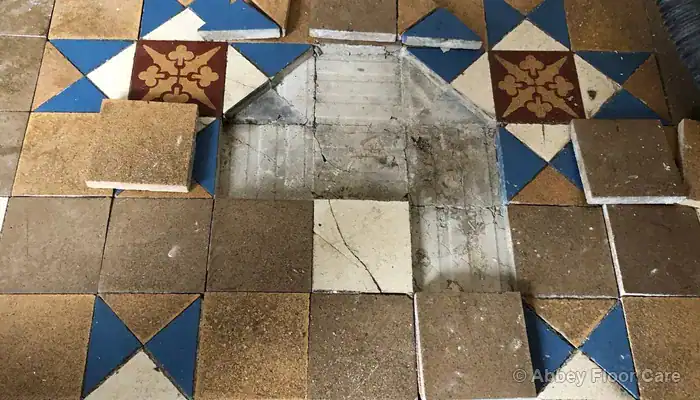
Uncovering the Hidden Dirt Lurking Beneath Your Tiles
Repeated mopping can exacerbate the appearance of Victorian tiles, as dirty liquid seeps into the porous clay rather than being effectively removed. The surface may seem brighter when damp, only to revert to a grey or brown hue as the tile pores and worn hollows retain soil beneath the immediate surface.
The open clay structure facilitates the lateral and downward movement of liquid through tiny channels. Slurry extraction is the professional technique that guarantees suspended soil is removed from the floor before it has a chance to dry back into the tile pores, original features, and damaged areas. The critical distinction lies in effective removal, not merely applying more force.
Open clay retains dirty liquid until proper extraction is performed.
Any darkening that reappears after drying indicates embedded contamination rather than just superficial dust. Controlled cleaning can enhance the appearance without treating the floor as if it were made of marble, porcelain, or any surface that can simply be polished.
Exploring the Causes of Uneven or Faded Tile Finishes
Uneven colour after cleaning often indicates that old coatings have been disturbed, revealing the true clay surface beneath. Untreated clay typically dries flatter and lighter because no coating is enhancing the colour, making signs of historic wear and softer buff tile deterioration more pronounced.
Coated areas may appear darker, glossier, or cloudier due to waxes, acrylic sealers, residual coatings, and surface layers that remain trapped in the pores and grout lines. The application of acrylic wax finishes, water-based topical sealers, and linseed oil coatings can create a visually appealing deepening effect until build-up, moisture, or salts cause the surface to fail.
Patchiness serves as a diagnostic indicator rather than proof of cleaning failure. Observing the before-and-after changes can reveal more pronounced geometric patterns, improved colour depth, and surface colours that were previously obscured by coating residues.
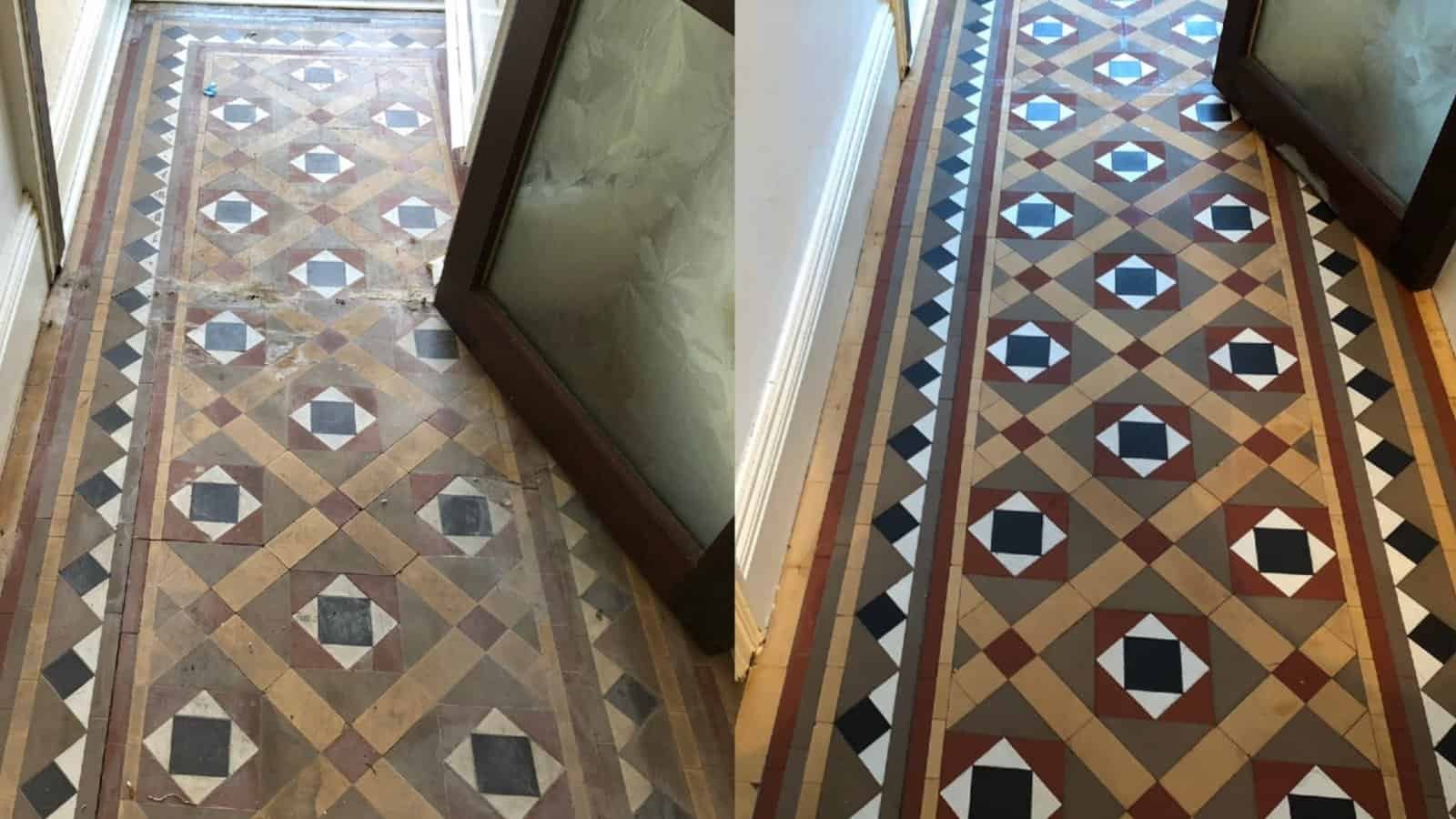
Understanding Rapid Re-soiling After Cleaning: Key Insights
If your Victorian tiles appear clean while damp but revert to a grey hue after drying, it is likely that residue is cycling back through the surface. Cleaning solutions, household detergents, rinse water, and fine soil can become trapped in porous clay when dirty liquid is spread rather than extracted.
This cycle of residue can lead to dull areas, streaks, sticky patches, and rapid re-soiling as the surface continues to receive contamination from beneath. This problem often worsens in areas where cement grout joint failures have resulted in missing cement, dirty joints, loose grout, and unprotected edges that accumulate soil under heavy foot traffic.
The homeowner’s threshold is marked by persistent greying after diligent mopping and complete drying. At this point, using stronger domestic products is more likely to add residue rather than resolve the underlying clay behaviour.
Confronting Persistent Grime That Resists Standard Cleaning Techniques
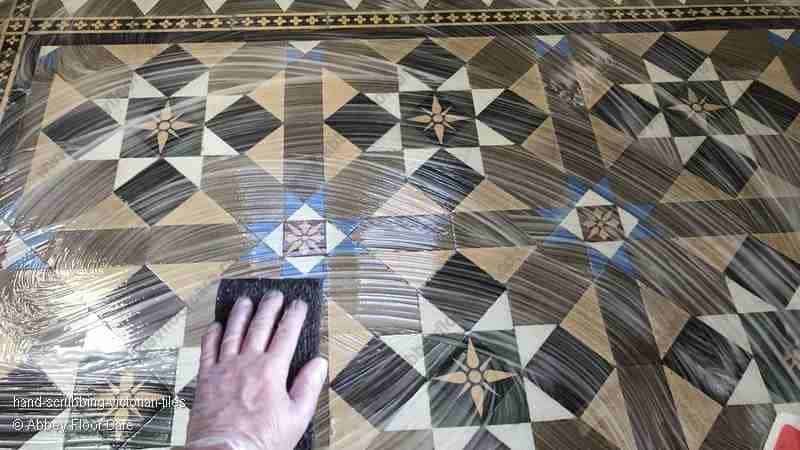
The difference between successful professional cleaning and standard mopping lies in the method of slurry extraction, which is vital for removing loosened grime before it can settle back into the clay. Domestic scrubbing may disturb dirt, but it often leaves the soiled liquid trapped in the clay surface, grout joints, and worn hollows.
Controlled cleaning utilises alkaline degreasing detergents, appropriate dwell time, agitation, and wet vacuum removal to effectively separate grime, waxes, and softened residues from the floor. Heavy-duty cleaning chemistry, stiff brush contact, and coarse scouring pad selections require careful consideration, as excessive force can compromise soft clay, vulnerable edges, and the historic integrity of the tile surface.
The result is a cleaner surface that regains its clarity and remains cleaner for longer, as the contamination layer has been effectively removed rather than merely redistributed. The Victorian clay tile cleaning project in Blyth exemplifies this boundary between cleaning methods, showcasing the importance of professional extraction and protection as essential support rather than a simple DIY sequence.
Identifying Errors in Sealing and Moisture Control
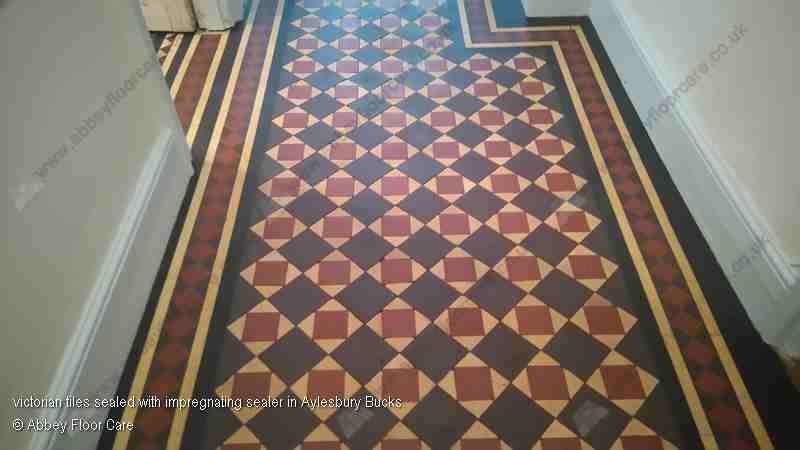
Sealing an unsuitable Victorian tile floor can lead to moisture trapping, worsening whitening, patchiness, and cleaning difficulties. Film-forming coatings create a surface barrier, while old porous tiles may still require water vapour to escape from the tile body and bedding.
Breathable protection functions by slowing stains and dirt without hindering moisture release. A breathable impregnating sealer occupies the pores, allowing moisture to evaporate and providing stain resistance once the floor has dried sufficiently for sealing. The risks associated with high-gloss finishes are detailed in the high-gloss sealer risk guide for Victorian hallway tiles, where moisture-sensitive floors and surface film coatings are examined as sealing decisions rather than cleaning shortcuts.
Protection must mitigate spills without obstructing vapour movement.
Failing coatings behave differently from breathable finishes, as trapped moisture can lead to peeling, cloudiness, staining, or a dirty appearance returning. Simply achieving shine is never a reliable indicator that the floor has been correctly protected.
Effectively Managing White Marks and Coating Failures
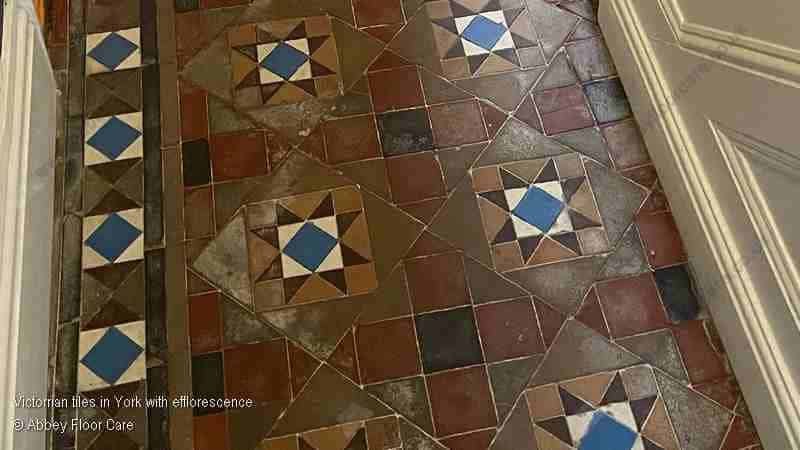
White marks that return after cleaning often indicate moisture and salts rather than mere surface dirt. Efflorescence refers to white calcium deposits, nitrates, salts, and powdery residues left on the surface as moisture rises from the substrate and subsequently evaporates.
Staining occurs when colour penetrates the clay or grout, while coating failures remain at the surface as ineffective barriers. Paint and adhesive encrustation introduce different challenges: residues from paint splatters, glue, old adhesives, hardened substances, and scraper marks can lead to surface contamination or penetration from hallway coverings.
Recurring marks are significant because repeated cleaning can overly saturate old floors and reactivate salt issues. Excessive moisture, bedding plane moisture, and drying behaviours elucidate why white deposits may reappear even after the tile surface has been thoroughly cleaned.
Ensuring Long-Term Maintenance for Your Cherished Floors
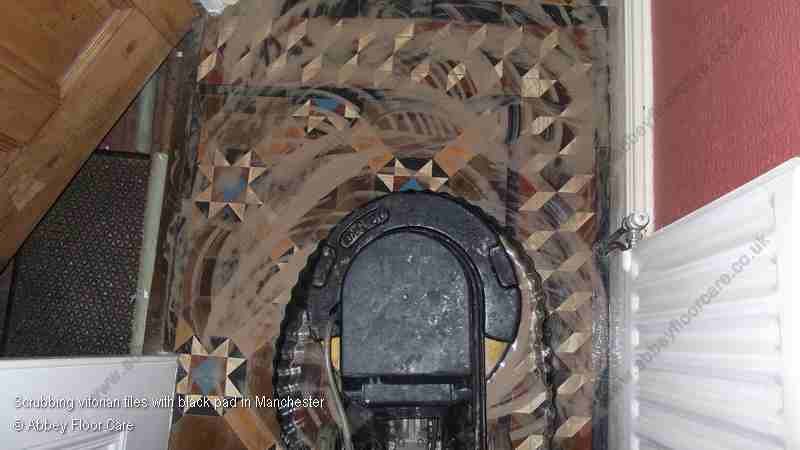
Grinding or aggressive scrubbing can irreversibly diminish the colour of Victorian tiles, even when the floor requires only safer maintenance. Using abrasive pads, harsh scrubbing, wire wool, and excessive cleaning can scratch the historic tile surface and degrade clay inlays instead of simply removing dirt.
Safe maintenance practices involve minimising grit before wet mopping and using pH-neutral cleaning solutions specifically designed for porous tiles. One crucial practice to avoid is steam cleaning, as heat and excess moisture can drive dirty liquid deeper into the tile body and disturb salts in older floors.
Proper ongoing maintenance ensures the floor remains cleaner, reduces surface wear, and protects the original colour and character. A prime example of effective cleaning practices is showcased in the Victorian tile cleaning project in Littleover Derby, highlighting the importance of disciplined maintenance over aggressive domestic scrubbing.
Recognising When Deeper Diagnosis of Your Flooring Is Required
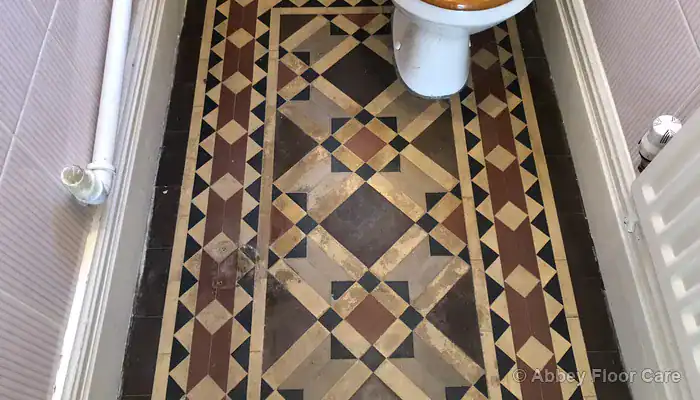
Cleaning reaches its limits when marks reappear after complete drying or when the floor exhibits salts, movement, or permanent colour loss. It is critical to differentiate between temporary soiling and issues caused by moisture, wear, coating residues, or unstable bedding.
These diagnostic thresholds assist in distinguishing routine cleaning from specialist evaluation:
- White powder reappears after drying, indicating salt movement.
- Dark patches resurface within 48 hours, signalling embedded contamination.
- Tiles exhibit movement or sound hollow, indicating a risk of loose tiles.
- Pattern details remain pale even when clean, highlighting colour wear.
Loose tiles, cracked sections, raised or sunken tiles, and vulnerable edges should not be regarded as standard cleaning challenges. The Edwardian clay tile repair and cleaning case study illustrates how repair processes belong to a separate workflow when issues of movement, grout failure, or replacement dominate.
Determining the Next Steps for Professional Help
The appropriate next step varies based on whether the floor necessitates cleaning, coating removal, salt treatment, sealing advice, or restoration assistance. A hub page should not aim to address every condition, as repair, restoration, sealing risks, and colour-loss diagnoses each require their own specific focus.
Heavy coating build-up, old sealers, carpet adhesive residues, bitumen residues, and paint contamination suggest the need for specialist removal rather than routine mopping. A real-life example of adhesive and coating residue is illustrated in the Minton tile floor restoration in Ovington, where a vital lesson from this hub is recognising when dirt is not the sole issue.
Clear navigation protects the floor from over-treatment. Floors with missing tiles, structural movement, or restoration-related colour recovery should be directed to the appropriate subordinate page rather than conflating this cleaning hub with repair or restoration guidance.

David Allen — Abbey Floor Care
David Allen brings over 30 years of experience in working with Victorian, Edwardian, and Minton clay tile floors at Abbey Floor Care. His expertise supports this cleaning hub by defining safe cleaning practices, coating removal, salt behaviour, breathable sealing, and aftercare, distinctly separated from the restoration or repair processes that require their own specific diagnosis.
The Article The Master Guide to Victorian & Minton Tile Restoration first found on https://www.abbeyfloorcare.co.uk
The Article Victorian & Minton Tile Restoration: The Ultimate Guide appeared first on https://fabritec.org
The Article Victorian Tile Restoration: Your Comprehensive Guide to Minton Was Found On https://limitsofstrategy.com
The Article Minton Tile Restoration: An Essential Guide for Victorians found first on https://electroquench.com